Some things that come to mind for Database Aesthetics
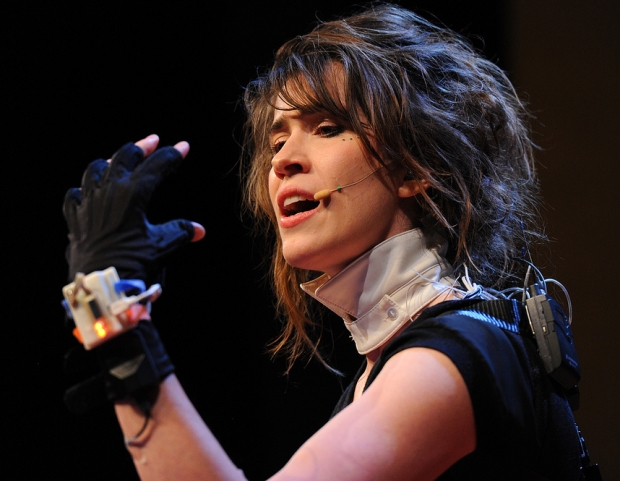
1.) I’ve been thinking about this for a while now, and wasn’t sure whether to post this in Archives/Libraries time, but I guess it is most appropriate as a database art? Anywho, it’s near. Imogen Heap working from a database of sounds to make a song / a movement mapping of sound, if you will:
2.) I still don’t really understand what UBUWeb is exactly, but here it is:
Someone in my Thesis Colloquium was posting about iPoetry and listed this amongst the emergence thereof. It’s Kenneth Goldsmith’s project. The post talked about digital poetics, citing Vanessa Place and Stephanie Strickland along with Goldsmith as conceptual and digital writers and offering the following from Christian Bok:
“In the future, poets may be required to learn a catechism outside of their formal, literary training. They may have to learn how to be computer programmers, learning to program Perl scripts in order to actually mine the vast exobytes of information that are out there on the Web. In the future we could easily imagine poets being celebrated not so much for the quality of the poems that they write so much as for the quality of the programs that write poems on their behalf. We’ll celebrate poets as writers of code, not just as writers of words. I haven’t got a problem with that. I actually think that computers are very useful prostheses, and I am very interested in the kinds of literary work produced by machines. I’ve written at length about the only published computer which has produced a book of poetry: Racter, the author of The Policeman’s Beard Is Half Constructed, a very marvelous book of surrealism. What’s interesting about such a poet, for me, is not so much that it might someday supplant me and my job, but that, right now, it might write better than a human being. What’s fascinating about this particular computer program is that it knows nothing about poetry. It has no training in the formal history of such an activity, and yet it writes better than a human being who knows nothing about poetry. You would think that, surely, a computer that is ignorant of this activity wouldn’t be able to do a better job than a human who is ignorant of this same activity. And yet, I would probably prefer to read the doggerel written by this device than doggerel written by a human who has no training in poetry.”
Other such things:
The Center for Literary Computing
and Google Poetics, which I’ve mentioned before
3.) Not to be stuck on Miranda July, but her latest project involves asking artists/writers/etc to scour their emails for themes, then send these to whomever signs up:
4.) hey, cool
These are all great case studies, Bean! I’ve already finalized the readings for our “database aesthetics” discussion next week (as you can see on the syllabus) — but I hope we can address some of the examples you’ve shared here in our class discussion!
Oh yes of course! These are specific examples rather than broad readings so I mostly just posted these here for fun. I look forward to what you curated! Thank you!